Proxies · 8 min read · 7/27/2026
Geo-Targeting Proxies by City: A Practical Buyer’s Guide
A practical guide to selecting city-level proxies for local SEO, ad verification, testing, research, and other legitimate location-sensitive tasks.
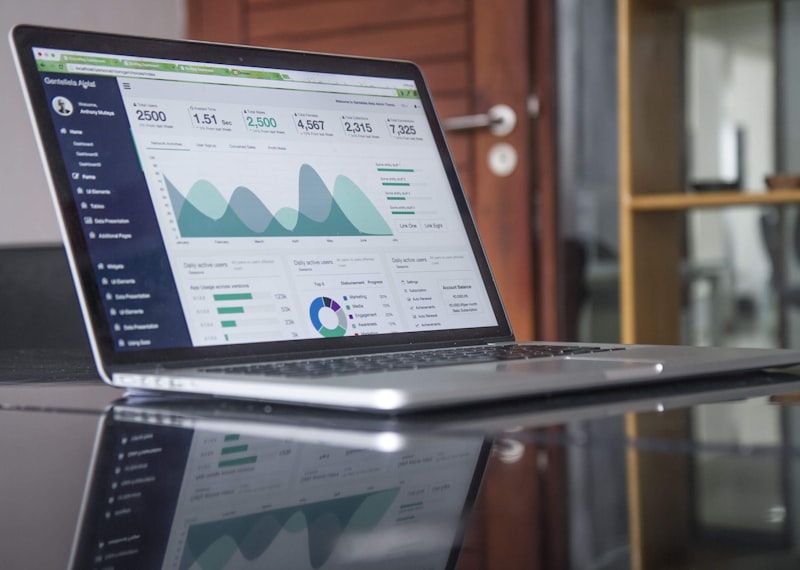
Geo-targeting proxies by city route internet requests through IP addresses associated with a selected metropolitan area. They help businesses inspect localized search results, verify advertising, test regional experiences, and collect location-dependent public data without traveling to every market.
City selection alone does not guarantee accurate results. IP databases disagree, websites use several location signals, and provider inventory changes continuously. This guide explains what to evaluate before buying.
What are city-targeted proxies?
A proxy acts as an intermediary between your device and a destination website. With city-level targeting enabled, the provider assigns an exit IP that geolocation databases associate with your requested city.
The available proxy types usually include:
- [Residential proxies](/blog/best-residential-proxies): IPs associated with consumer internet connections. They generally offer broad geographic coverage but are commonly billed by traffic.
- Mobile proxies: Connections routed through cellular networks. They can suit mobile-specific testing, although city attribution may be less predictable because carriers centralize traffic.
- ISP proxies: Datacenter-hosted IPs registered to or announced through consumer ISPs. They often provide stable sessions but may have narrower city coverage.
- [Datacenter proxies](/blog/datacenter-proxies): Server-hosted IPs optimized for speed and predictable costs. City options vary, and some websites identify them more easily than residential addresses.
A city-targeted pool may be large in major capitals and limited in smaller municipalities. Ask whether the displayed location reflects live inventory or merely a list of theoretically supported targets.
How city-level targeting works
Providers attach geographic metadata to their IP inventory using commercial databases, registry information, network observations, or a combination of sources. You normally specify a country, state or region, and city through a dashboard, username parameter, or API request.
The provider then selects an eligible exit node. Depending on the product, you can use:
- Rotating sessions, which may assign a new IP for each request or after a defined interval.
- Sticky sessions, which retain the same IP for several minutes or until the session expires.
- Static addresses, which remain assigned for longer periods and are more common with ISP or datacenter proxies.
Geolocation is an estimate rather than GPS-level proof. One database might place an IP in central Chicago while another assigns it to a nearby suburb or only to Illinois. Websites can also consider cookies, account history, device location, language, DNS behavior, and payment information. A proxy changes the apparent source IP; it does not automatically align every other signal.
Legitimate use cases
City targeting is valuable when a website changes content according to the visitor’s apparent location.
Local SEO monitoring
Teams can review search engine result pages, local packs, map features, and localized landing pages from selected markets. Use compliant tools and conservative request rates because search platforms restrict automated access.
Advertising verification
Advertisers and agencies can check whether campaigns appear in intended cities, confirm landing-page routing, and identify obvious placement problems. A proxy view is useful evidence, but it does not reproduce every element of an actual user profile or ad auction.
Website and app testing
Quality-assurance teams can validate currency, language, inventory, delivery messaging, promotions, and regional redirects. Testing multiple IPs helps distinguish a site defect from one incorrectly geolocated address.
Public web research
Organizations can examine publicly accessible prices, listings, and availability across local markets, subject to applicable laws and site terms. Avoid using proxies to access private data, bypass authorization, or evade technical restrictions.
Brand and affiliate compliance
City-level checks can reveal unauthorized promotions, inaccurate claims, or inconsistent partner pages. Save timestamps, destination URLs, and screenshots so findings can be reviewed independently.
Comparison: choosing the right proxy type
| Proxy type | Best suited to | Main advantages | Main limitations |
|---|---|---|---|
| Residential | Localized research and content checks | Broad coverage; consumer-network attribution | Traffic-based pricing; changing availability |
| Mobile | Cellular experience and mobile campaign testing | Mobile carrier context; shared carrier address space | Higher cost; imprecise city attribution in some networks |
| ISP | Long sessions and repeated testing | Stable addresses; typically faster than peer-based residential routing | Fewer cities; higher per-IP cost |
| Datacenter | High-speed QA and accessible-site monitoring | Fast; predictable capacity; economical at scale | Easier to classify as hosting traffic; uneven city coverage |
No category is universally best. Residential pools are often the starting point for broad city coverage, while ISP proxies can be preferable when session stability matters. Datacenter proxies are efficient when the target accepts hosting IPs. Mobile proxies should be chosen for a clear mobile-network requirement rather than reputation alone.
What to check before buying
Use this checklist during a trial or refundable evaluation period:
- Verified city inventory: Test the exact cities you need, including smaller markets.
- Independent geolocation: Compare results in at least two IP databases and against the destination website.
- Targeting syntax: Confirm whether country and region parameters are required alongside the city.
- Session controls: Review sticky-session duration, rotation rules, and the behavior after an IP disconnects.
- Pool transparency: Ask whether published pool sizes represent active, concurrent, or historical addresses.
- Performance: Measure connection success, time to first byte, and completed requests on your own target set.
- Concurrency limits: Check caps on threads, ports, sessions, or requests per second.
- Billing model: Compare per-GB, per-IP, and subscription pricing using your expected payload sizes.
- Traffic accounting: Determine whether failed requests, retries, and upload traffic count toward usage.
- Protocol support: Verify HTTP, HTTPS, and SOCKS5 availability where required.
- Authentication: Look for username-and-password and IP allowlist options.
- Compliance controls: Review acceptable-use rules, customer verification, consent standards, and abuse handling.
- Support quality: Test response times and whether support can diagnose location mismatches.
A short proof of concept is more informative than a provider’s global pool claim. Run representative URLs, cities, session lengths, and concurrency levels before committing.
Accuracy, speed, and reliability trade-offs
City precision can reduce the number of eligible IPs, especially outside major urban areas. A smaller pool may lead to more frequent reuse, failed connections, or fallback behavior. Confirm whether the service fails the request when a city is unavailable or silently routes through another location.
Peer-based residential and mobile networks can also fluctuate as devices enter and leave the pool. Typical latency ranges vary widely by route, geography, destination, and session type, so a universal speed figure is not meaningful. Measure performance from your deployment environment instead of relying only on vendor tests.
For reliable results:
- Select the nearest provider gateway when available.
- Use sticky sessions for multi-step journeys.
- Retry transient network failures with bounded exponential backoff.
- Validate the exit IP before a critical test.
- Keep concurrency within the provider’s documented limits.
- Record the requested and detected location for auditing.
Common mistakes to avoid
Do not assume that every IP labeled with a city will produce identical local content. Database lag, municipal boundaries, and website-specific logic cause differences.
Other common errors include:
- Buying a large global pool when only a few cities matter.
- Choosing the cheapest price per GB without measuring failed requests.
- Using rotation for workflows that require a consistent session.
- Ignoring browser cookies and account-based location history.
- Treating IP geolocation as proof of a person’s physical location.
- Running aggressive automation without reviewing terms, robots directives, or legal obligations.
FAQ
How accurate are geo-targeting proxies by city?
Accuracy depends on the provider’s labeling, the geolocation database used by the destination, and current routing. Major cities often have deeper inventory, but mismatches can occur anywhere. Test several addresses against the actual websites you plan to use rather than relying on one lookup tool.
Are residential proxies better for city targeting?
Residential proxies often offer broader city coverage and consumer ISP attribution, but they are not automatically more accurate or reliable. ISP proxies may provide steadier sessions, while datacenter proxies can deliver better speed and cost efficiency when accepted by the target.
Can a proxy completely simulate a user in another city?
No. It changes the source IP presented to the destination, but sites may use GPS permissions, cookies, device settings, account data, DNS signals, and previous behavior. Accurate testing may require a clean browser profile and aligned regional settings, used with proper authorization.
Bottom line
Geo-targeting proxies by city are useful for local SEO checks, advertising verification, regional QA, and compliant public-data research. Choose a network based on tested coverage in your required cities, cross-database location accuracy, session behavior, successful-request cost, and transparent sourcing—not headline pool size alone. A realistic trial on your own destinations is the safest basis for comparison.
Deep Analysis and Technical Implementation
To truly understand how geo-targeting proxies by city: a practical buyer’s guide impacts modern web infrastructure, one must look at the architectural requirements of enterprise-scale systems. When deploying proxies at this level, reliability isn't just a metric—it's the foundation. We've observed that high-concurrency workloads demand more than just raw speed; they require intelligent routing, protocol optimization, and robust error handling.
The Evolution of Proxy Infrastructure
The landscape has shifted significantly in recent years. We no longer just talk about simple IP rotation. Modern systems integrate complex browser fingerprinting mitigation, header optimization, and session management. For geo-targeting proxies by city: a practical buyer’s guide, this means ensuring that every request appears as organic as possible to the target server's anti-bot system.
#### Key Technical Considerations for 2026
- Protocol Selection: Choosing between HTTP/2 and socks5 can dramatically impact throughput and detection rates. While HTTP/2 offers better performance for web traffic, SOCKS5 remains the gold standard for UDP support and lower-level networking tasks.
- Geographic Distribution: It is not enough to have a large pool; the distribution must match the target's traffic patterns. An effective strategy involves localized egress points that minimize latency and bypass regional blocks.
- Rotation Logic: Implementing custom rotation rules—such as sticky sessions for account management or per-request rotation for scraping—is vital for maintaining high success rates.
Future Outlook and Strategic Recommendations
As we look toward the remainder of 2026, the intersection of AI and data collection will only intensify. Proxy providers are now integrating machine-learning-driven captcha solving and request retries. This automation allows developers to focus on data analysis rather than infrastructure maintenance.
For businesses looking to optimize their geo-targeting proxies by city: a practical buyer’s guide strategy, we recommend a multi-provider approach. By balancing traffic across different networks, you can hedge against provider-specific outages and take advantage of regional price differences.
Implementation Guide and Best Practices
When configuring your stack, always prioritize core web vitals if your scraping affects page rendering metrics. Furthermore, ensuring a clean dns leak profile is critical for maintaining anonymity in sensitive operations.
In conclusion, mastering geo-targeting proxies by city: a practical buyer’s guide requires a commitment to technical excellence and a deep understanding of the underlying protocols. By focusing on quality, transparency, and performance, you can build a scraping or automation pipeline that stands the test of time and delivers consistent, high-value data. For more information, you can check our buying guide or read our latest provider reviews.
Benchmark data
Figures below come from our own provider tests — the same dataset behind our provider reviews.
Successful responses across 12 target sites (higher is better).
Median time to first byte in seconds (lower is better).
Share of tested providers offering each network type.
- Residential29%
- ISP29%
- Datacenter24%
- Mobile19%
Related reading
Proxies · 8 min read
Cheap Residential Proxies: How to Choose Without Regret
Learn how to find affordable residential proxies without sacrificing reliability, targeting, security, or ethical sourcing.
Proxies · 10 min read
Best Residential Proxies: 8 Providers Compared in Depth
A practical comparison of residential proxy providers based on network reach, controls, pricing models, compliance, and use cases.
Proxies · 8 min read
ISP Proxies Explained: Benefits, Uses, Risks, and Costs
ISP proxies combine residential-looking IP addresses with server-hosted performance, making them useful for stable, identity-sensitive sessions.
Proxies · 8 min read
SOCKS5 Proxies Explained: Uses, Benefits, and Setup Guide
A practical guide to SOCKS5 proxies, including how they route traffic, key use cases, security limits, and setup steps.
Proxies · 8 min read
Datacenter Proxies: How They Work, Benefits, and Uses
A practical guide to datacenter proxy types, use cases, trade-offs, pricing models, and essential buying criteria.
Proxies · 8 min read
Static Residential Proxies: Uses, Benefits, and Risks
A practical guide to static residential proxies, including how they work, when to use them, and what to check before buying.