Antidetect · 8 min read · 7/21/2026
Antidetect for Dropshipping: A Practical Setup Guide
A practical guide to isolating dropshipping accounts with browser profiles, suitable proxies, access controls, and repeatable workflows.
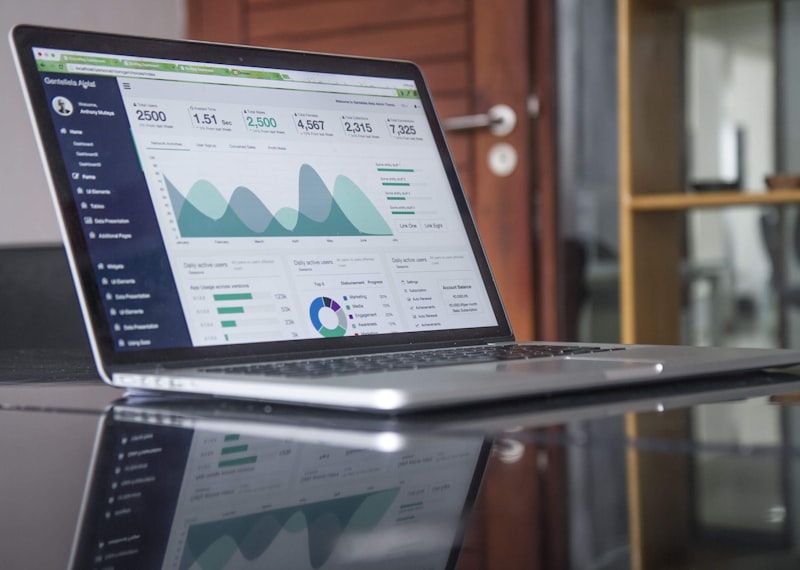
Dropshipping teams often manage supplier portals, storefronts, advertising dashboards, payment services, and social accounts from the same computers. An antidetect browser can separate those sessions into individual profiles, each with its own cookies, storage, proxy configuration, and browser fingerprint settings.
That separation can reduce accidental logins and cross-account contamination, but it does not make accounts anonymous or immune to platform enforcement. The safest approach is to use antidetect for dropshipping only where platform rules allow it, with accurate business information and disciplined account management.
Why dropshipping teams use antidetect browsers
A normal browser profile shares a large amount of state across sessions. Cookies, local storage, cached files, extensions, and remembered logins can connect activity that an operator intended to keep separate. Private browsing clears some data, but it does not provide durable, independently configured workspaces.
An antidetect browser creates persistent profiles that can be assigned to specific stores or business entities. Common use cases include:
- Keeping storefront, supplier, email, and advertising sessions organized by brand
- Giving employees access without sharing a single browser profile
- Maintaining separate cookies and local storage for authorized client accounts
- Applying a dedicated proxy to each profile when regional access is legitimate
- Reducing mistakes such as opening Store A's dashboard while using Store B's credentials
- Preserving stable sessions instead of repeatedly logging in from fresh environments
The primary benefit is operational isolation—not invisibility. Ecommerce platforms can assess identity records, payment details, shipping information, account behavior, network reputation, and many other signals beyond the browser fingerprint.
What an antidetect profile actually isolates
A well-designed profile stores browser data separately and presents a consistent software environment. Depending on the product, configurable or managed attributes may include:
- Cookies, cache, history, and local storage
- User agent and operating-system presentation
- Screen size, language, locale, and time zone
- WebGL, Canvas, AudioContext, and font-related outputs
- WebRTC behavior and media-device exposure
- Proxy credentials and DNS handling
- Extensions, bookmarks, and saved sessions
Consistency matters more than aggressively changing every setting. A profile claiming to be a macOS browser should not expose obviously conflicting Windows characteristics. Likewise, its language and time zone should make sense for the connection location and the account's normal operating region.
Most reputable tools offer automatic fingerprint generation. That is usually safer than manually assembling an unusual combination. Randomizing settings on every launch can also be counterproductive because established accounts commonly benefit from a stable environment.
Choosing proxies for dropshipping profiles
The browser profile and proxy serve different purposes. The profile separates browser state and controls fingerprint-related signals; the proxy supplies the network route and visible IP address. An antidetect browser without a properly configured proxy will still use the device's normal public IP.
Residential proxies
[Residential proxies](/blog/best-residential-proxies) route traffic through consumer ISP addresses. They can suit geographically sensitive workflows, but they are generally more expensive and are often billed by traffic. Quality varies by sourcing practices, IP reputation, and location accuracy.
ISP proxies
ISP proxies are usually hosted on servers but use addresses registered to internet service providers. Static ISP IPs can provide a stable identity for long-running profiles and typically offer better consistency than rotating connections. Verify that the location and provider labeling match your requirements.
Datacenter proxies
Datacenter proxies are fast and economical, but their hosting-network origin is easier for services to recognize. They can be appropriate for low-risk administration or testing where the platform permits proxy access. They are not automatically suitable for sensitive merchant or payment accounts.
Mobile proxies
Mobile proxies use cellular network addresses and may rotate behind carrier-grade NAT. They are often costly, and frequent IP changes can be undesirable for persistent store administration. Use them only when a mobile network genuinely fits the workflow.
For account continuity, prefer a dedicated or sticky address over rapid rotation. Do not switch countries unexpectedly, and do not assume that an expensive proxy can repair a previously flagged account.
Antidetect and proxy comparison checklist
Use this checklist to evaluate a setup rather than choosing solely by profile count or headline price.
| Area | What to look for | Warning sign |
|---|---|---|
| Profile isolation | Separate cookies, storage, cache, and proxies | Shared state between profiles |
| Fingerprint consistency | Coherent OS, browser, screen, locale, and IP | Contradictory or highly unusual values |
| Proxy controls | Per-profile assignment and leak protection | Unclear DNS or WebRTC behavior |
| Collaboration | Roles, profile sharing, and activity logs | Shared master passwords |
| Automation | Documented API and controlled permissions | Unsupported scraping or mass actions |
| Security | Encryption, MFA, backups, and vendor transparency | No clear security documentation |
| Portability | Cookie export or migration options where appropriate | Complete vendor lock-in |
| Support | Clear setup and incident-response guidance | Vague claims of guaranteed account safety |
Test software with non-critical profiles before migrating live operations. Check startup reliability, profile synchronization, proxy failures, and how the tool handles forced updates. Browser cores should be updated regularly; an obsolete browser version may look less natural and may also contain security flaws.
A safer setup workflow
Start with an inventory of authorized business assets. Map each store to its legal entity, email address, payment account, advertising account, supplier access, assigned operator, and normal operating region. This prevents technical isolation from hiding organizational mistakes.
Then apply the following process:
- Create one profile per operational identity. Use a clear internal name, but avoid storing sensitive credentials in the profile name.
- Select a realistic environment. Keep the operating system, browser version, language, and time zone coherent.
- Assign a stable proxy if needed. Match its location to the account's legitimate business context and avoid unnecessary rotation.
- Run leak checks. Confirm the public IP, DNS behavior, WebRTC exposure, time zone, and geolocation permissions before login.
- Install minimal extensions. Every extension changes the environment and expands the attack surface.
- Log in normally. Avoid simultaneous access from distant locations or abrupt changes in device patterns.
- Assign access by role. Staff should receive only the profiles needed for their work.
- Record changes. Log proxy replacements, profile transfers, recovery events, and unusual platform prompts.
- Back up safely. Protect recovery codes and essential profile data with encrypted storage and limited access.
If a proxy fails, stop the session rather than falling back silently to the local connection. A kill-switch or fail-closed option is valuable when available.
Mistakes that create more risk
Antidetect software cannot compensate for weak business practices. Frequent causes of trouble include:
- Creating duplicate accounts contrary to marketplace or advertising policies
- Using false identity, tax, billing, or shipping information
- Reusing payment methods or recovery details without a valid business reason
- Logging into one profile through several unrelated countries
- Sharing profile credentials through chat or spreadsheets
- Rotating IPs during active checkout, payment, or account-review sessions
- Cloning identical profiles at scale
- Installing untrusted extensions or automation scripts
- Treating a platform suspension as a fingerprint problem without reading the stated reason
When an account is restricted, use the platform's appeal process and provide accurate documentation. Attempting to bypass enforcement can compound the issue and may violate contractual or legal obligations.
Security and compliance considerations
An antidetect browser may contain valuable sessions for stores, ad platforms, and email accounts. Protect it as privileged infrastructure. Enable multi-factor authentication, use a password manager, remove former employees promptly, and review profile-sharing logs.
Vendor due diligence also matters. Examine the privacy policy, data-storage location, encryption claims, breach history, update cadence, and account-recovery process. For proxies, look for transparent sourcing and acceptable-use policies. Avoid services that advertise access to compromised devices or make unverifiable promises about undetectability.
Finally, review the rules of every connected service. Some platforms permit agency access through official partner or staff features, which may be safer than sharing sessions. Use native team permissions whenever they satisfy the operational need.
FAQ
Is antidetect for dropshipping legal?
Antidetect browsers are general-purpose privacy and profile-management tools, so their legality depends on jurisdiction and use. Legitimate account separation may be lawful, while fraud, identity misrepresentation, unauthorized access, or evasion of platform enforcement may violate laws and terms of service. Seek legal advice for regulated or high-risk workflows.
Do I need a separate proxy for every store?
Not always. A proxy should solve a defined network or location requirement, not be added automatically. When independently operated profiles require distinct, stable network identities, per-profile proxies can reduce accidental overlap. Official staff access from one legitimate office connection may be preferable when the platform supports it.
Can an antidetect browser prevent store suspensions?
No. It can isolate browser state and help maintain consistent sessions, but platforms also evaluate verification documents, payments, products, fulfillment, customer complaints, behavior, and network reputation. No provider can credibly guarantee suspension-proof accounts.
Bottom line
Antidetect for dropshipping is most useful as an account-organization and session-isolation layer. Build one consistent profile per authorized operational identity, use stable and ethically sourced proxies only when needed, enforce role-based access, and monitor leaks and changes. Above all, pair the technical setup with truthful records, reliable fulfillment, and compliance with marketplace, advertising, and payment policies.
Benchmark data
Figures below come from our own provider tests — the same dataset behind our provider reviews.
Successful responses across 12 target sites (higher is better).
Median time to first byte in seconds (lower is better).
Share of tested providers offering each network type.
- Residential29%
- ISP29%
- Datacenter24%
- Mobile19%
Related reading
Antidetect · 10 min read
Best Antidetect Browsers 2026: 8 Tools Compared in Depth
We compare eight antidetect browsers by profile isolation, proxy support, automation, collaboration, usability, and overall value.
Antidetect · 8 min read
Browser Fingerprinting Explained: What Websites Can Detect
Learn how browser fingerprints are assembled, tested, and used—and why changing your IP address alone does not prevent recognition.
Antidetect · 8 min read
What Is an Antidetect Browser? Uses, Risks, and Features
Learn how antidetect browsers manage digital fingerprints, where they are used, and what legal, security, and operational risks to consider.
Antidetect · 8 min read
Canvas Fingerprinting: How It Works and How to Block It
Canvas fingerprinting turns subtle browser rendering differences into a persistent identifier, but layered defenses can reduce its accuracy.
Antidetect · 8 min read
WebGL Fingerprinting: How It Works and How to Limit It
WebGL fingerprinting uses graphics-rendering signals to help identify browsers, often without cookies or persistent local storage.
Antidetect · 8 min read
Audio Fingerprinting: How It Tracks Browsers and Devices
Audio fingerprinting uses subtle differences in browser audio processing to help identify devices without cookies.